OBD2 Scanner vs Diagnostic Tool: What’s the Difference and Which Do You Need?
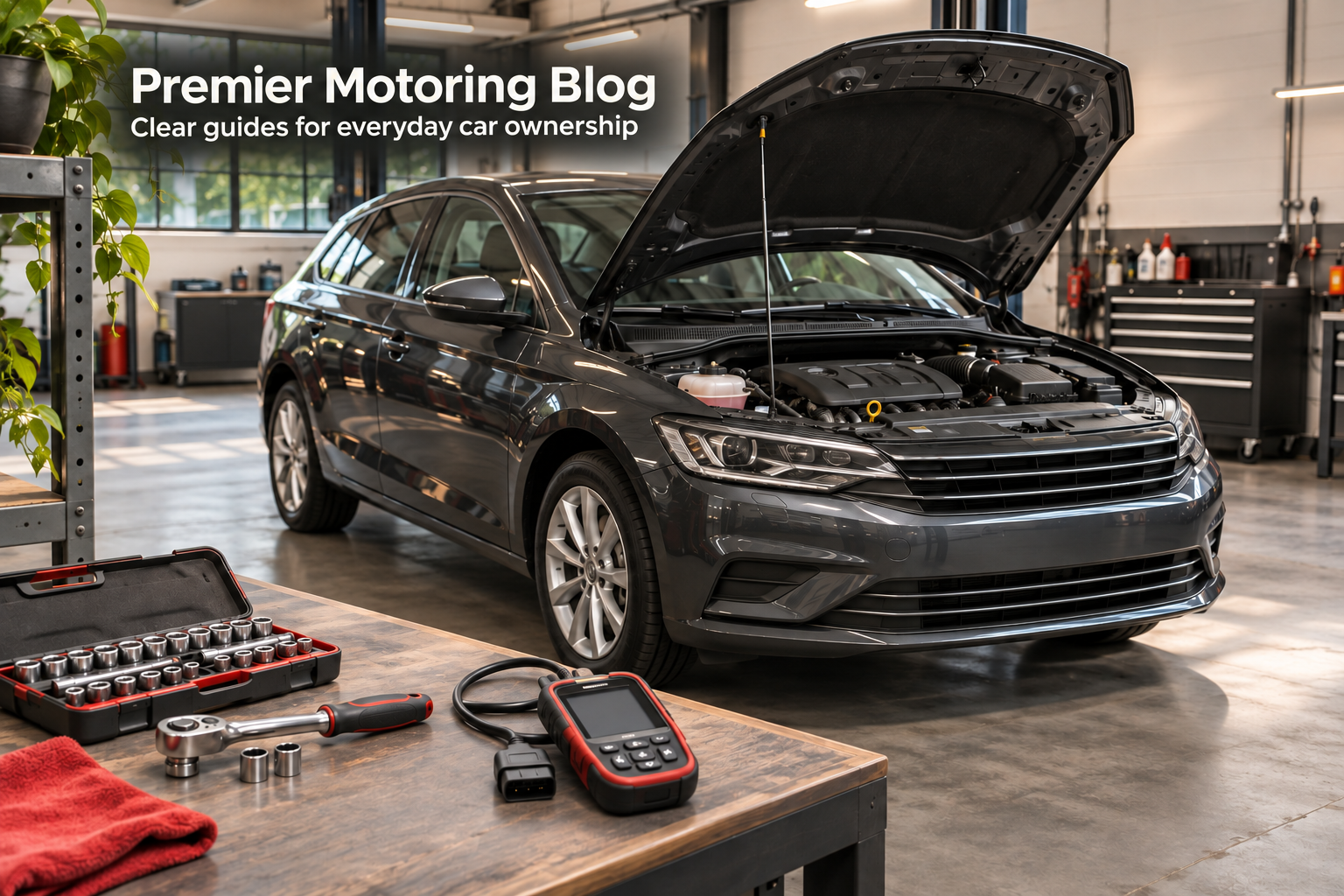
A basic OBD2 scanner generally retrieves generic emissions-related information from the engine control unit. A broader professional diagnostic tool may also access other vehicle modules, run commanded tests and carry out supported service functions. The difference is one of capability, not simply the name printed on a device: features depend on its software and on the vehicle’s make, model, year and electronic configuration.
Both types connect through the vehicle’s diagnostic port, but they can differ in the communication protocols they support and the systems they can reach. The terms scanner, code reader and diagnostic tool are not consistent capability specifications, so check the functions and vehicle coverage of the particular device before buying or relying on it.
OBD2 scanner vs diagnostic tool: the main difference
In broad terms, a basic consumer OBD2 scanner focuses on generic powertrain and emissions-related information from the engine control unit. Professional-grade equipment may communicate with additional manufacturer-specific networks and electronic control modules, as well as offering functions beyond reading codes.
This is a spectrum rather than a strict divide. Some devices sold as scanners offer more than basic code reading, while the capabilities of professional tools also vary. A product label alone does not tell you whether a particular tool can access your vehicle’s ABS, airbag or other systems.
What a basic OBD2 scanner can do
A basic scanner can retrieve generic powertrain diagnostic trouble codes, show selected live engine data and, once a fault has been addressed, clear a check-engine light. Live information may include engine speed (RPM) or coolant temperature. Some tools can also show whether emissions monitors have completed their checks, which can help an owner check readiness before an inspection.
For example, a scanner may retrieve a P0300 random-misfire code or a P0420 catalyst-efficiency code. These are useful starting points for further investigation, not proof that a particular component has failed. A code may identify a system or circuit associated with a fault; the underlying cause could involve a sensor, its wiring, another fault or the control module. Reading the code is not the same as confirming the diagnosis or repair.
If you are interpreting a P0300 result, see our guide to what a P0300 code can mean. Its code-specific discussion is a useful next step, but it is not a substitute for assessing the individual vehicle.
A basic engine-focused scan is not a complete vehicle health check. The type of scanner described here may not access non-powertrain modules such as ABS, the supplemental restraint system (SRS, or airbag system) and climate-control systems. If a warning relates to one of these systems, an engine-code reader may not provide the information needed to investigate it.
What a professional diagnostic tool adds
Depending on the device and vehicle, broader diagnostic equipment may access manufacturer-specific information from additional modules, including the transmission control module, ABS, SRS, body-control and some comfort systems. This can help investigate faults beyond the engine and emissions systems, but access is not guaranteed for every tool or vehicle.
Some tools offer bi-directional testing: they can send a command to a supported component or actuator so its operation can be checked. For example, a technician may be able to command a fuel pump to prime or a cooling fan to run. Whether a command is available depends on the tool’s software and the vehicle’s configuration. The test can help with diagnosis, but its result alone does not prove what caused a fault.
More advanced devices may also offer coding, adaptation or other module-related functions when parts are replaced. Depending on the specific tool and vehicle, examples can include electronic parking-brake service functions, battery registration, throttle-body programming or adaptation, and steering-angle calibration. These functions are not universal, and access to a command does not by itself establish that a repair has been completed correctly.
Hardware varies too. Devices may be handheld or connect to a phone, while some professional systems use dedicated tablet-style equipment. Features such as data display, graphing, speed and build quality depend on the product; a device’s form factor alone does not establish its diagnostic coverage.
Which type of tool do you need?
- For a basic engine-code check: A consumer OBD2 scanner may be suitable if you want generic powertrain codes, selected live engine data or emissions-monitor readiness information.
- For a fault outside the engine system: Check whether the tool can communicate with the relevant module on your exact vehicle. ABS, airbag and other warning systems may need broader coverage.
- For an active test or service function: Look for explicit support for the function and vehicle, rather than assuming that a device described as a scan tool can perform it.
- For a complex or safety-critical fault: A workshop or suitably qualified technician may be appropriate, particularly when the work involves brakes, steering or airbags.
Before buying or using a tool, verify coverage for the vehicle’s exact make, model and year, and check that the required module or function is supported. Coverage varies by tool maker and vehicle configuration, so a general product description cannot confirm compatibility for a particular vehicle-and-tool combination.
For brake, steering and airbag-related work, consult the vehicle’s service information and use a suitably qualified technician where the procedure or your experience requires it. A scan tool can provide information or issue supported commands, but it does not confirm the exact repair, prove a component has failed, establish that a vehicle is safe to drive or replace professional diagnosis.